How-to

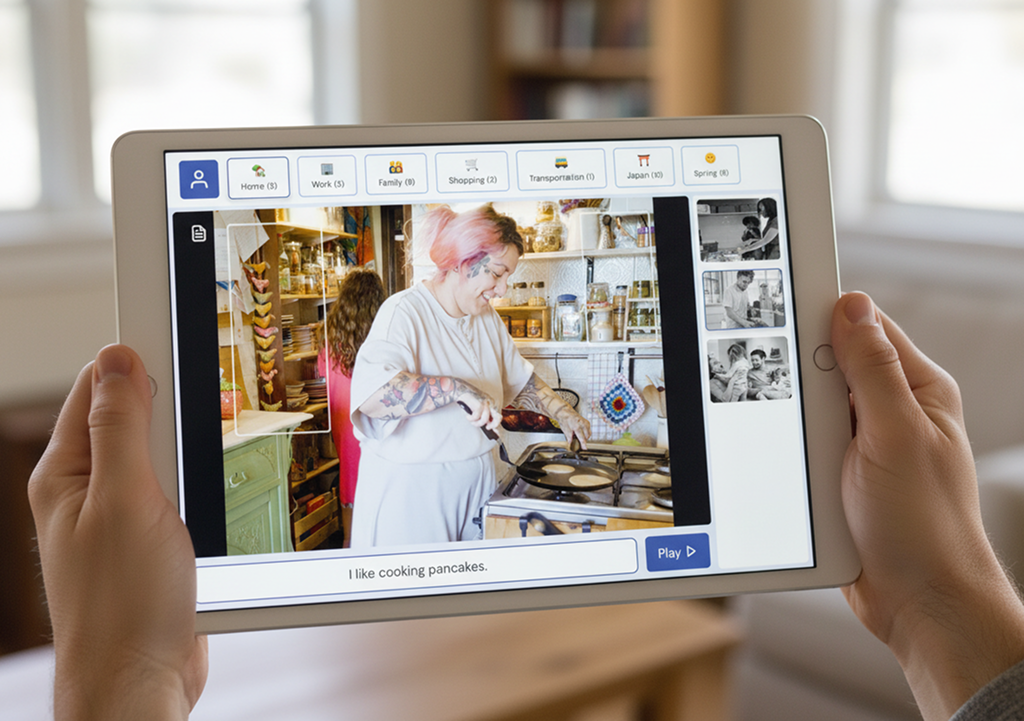
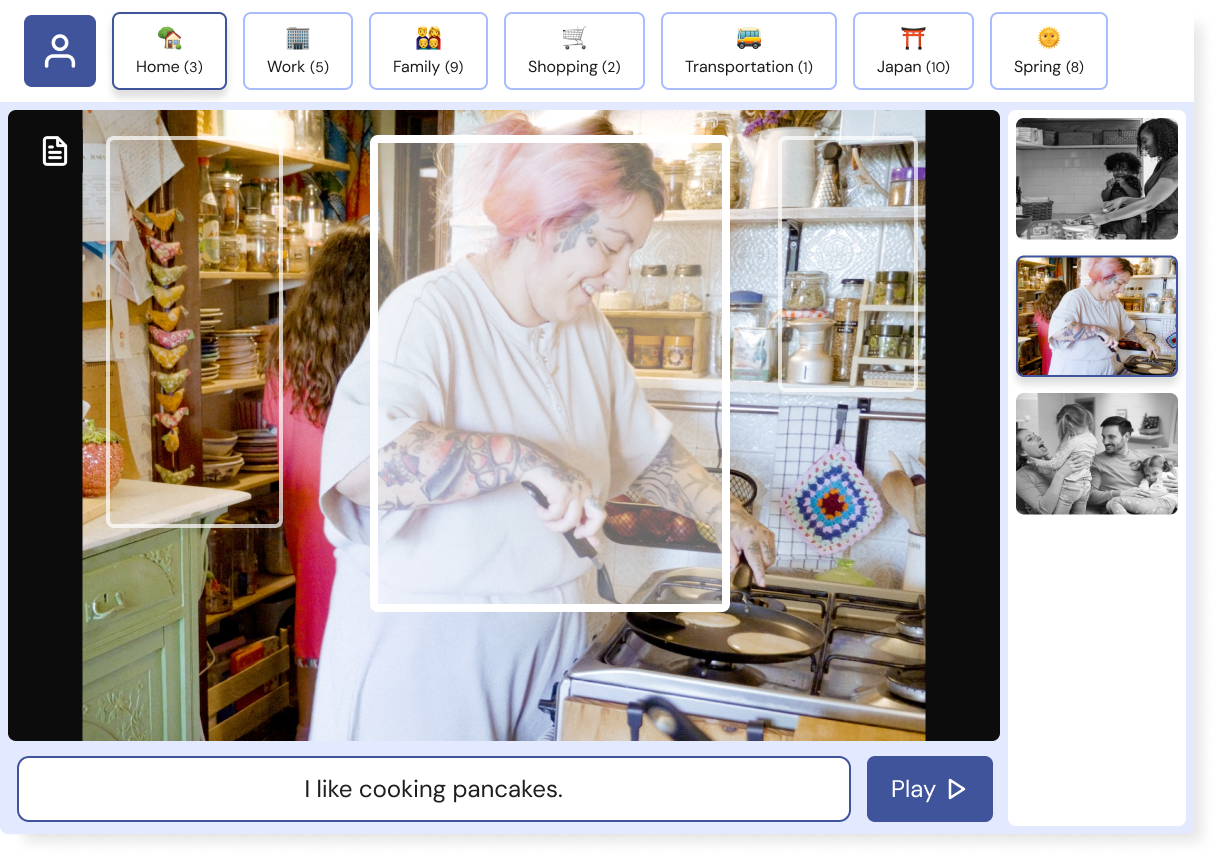
Tap the moment.

Say the message.

A dinner with friends.

Cousin Lisa’s wedding.

That field trip to the beach.

A moment between you and your sister.


These moments already carry meaning. This app turns them into communication.

Take a photo, tap the people or objects in the picture, and the scene becomes a simple way to speak, share, and connect.

Data points on top of landscape

What makes this special?

Built on Research about Visual Scene Displays

Creators of MSB

Created by SLPs

This app is created by a speech-language pathologist and an SLP-turned-UX designer.

MSB colour logo

Connected to Real Experiences

Visual scenes help people communicate by connecting language to real experiences instead of abstract word lists or symbol grids.

Thought bubble

Based on evidence-based principles

The design follows evidence-based principles used in visual scene displays (VSDs), an approach widely used in speech therapy to support language and participation.

How it works

Tip: use photos with good lighting

01

Take or upload a photo

02

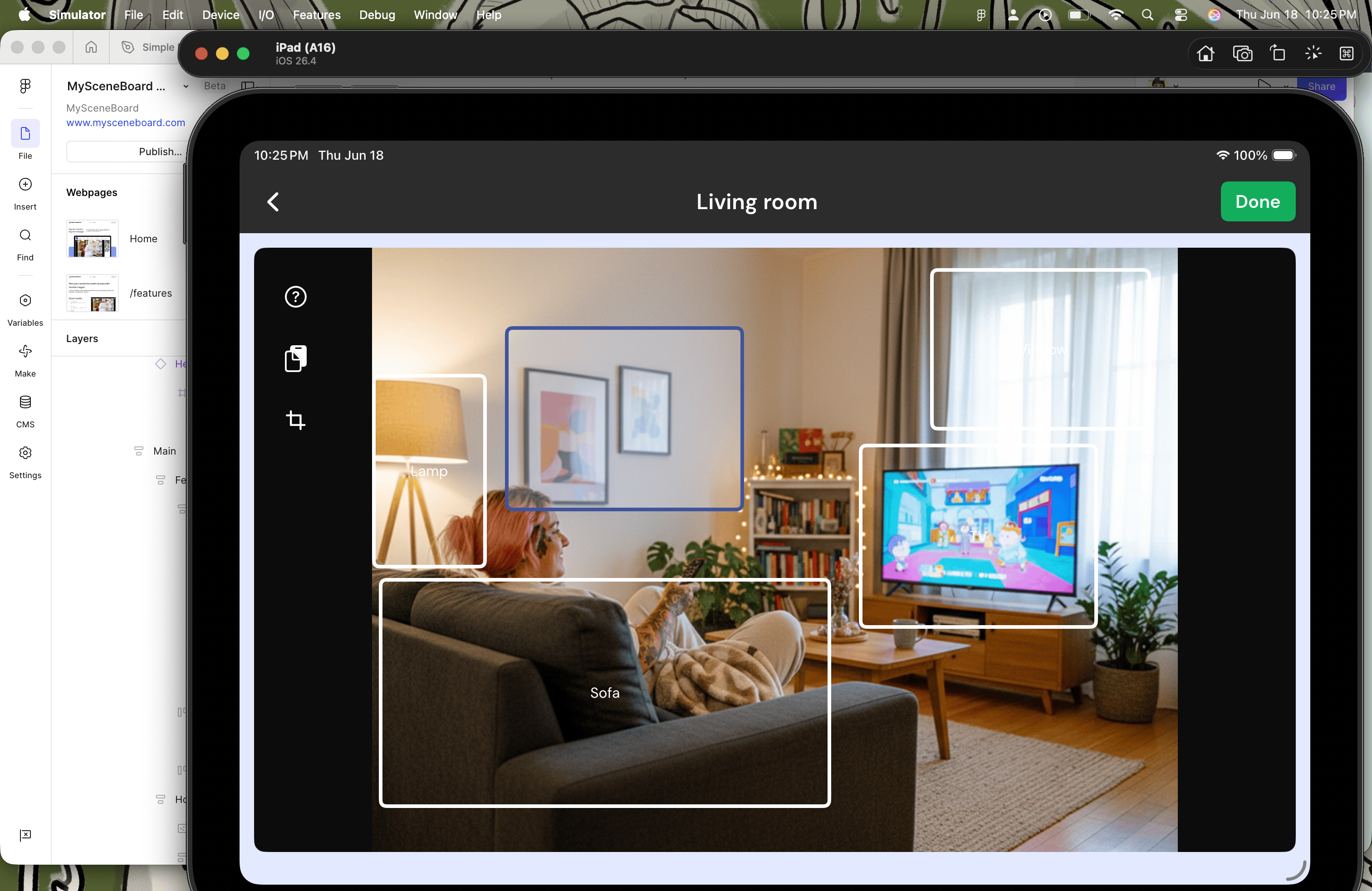
Drag and drop to create a hotspot

03

Add a label

04

Tap the scene to communicate

Bonus

Choose to record instead of using the system’s voice

Discover More

  • Why scenes help

  • Real experiences

    Language is easier when it is connected to real experiences.

    Photo familiarity

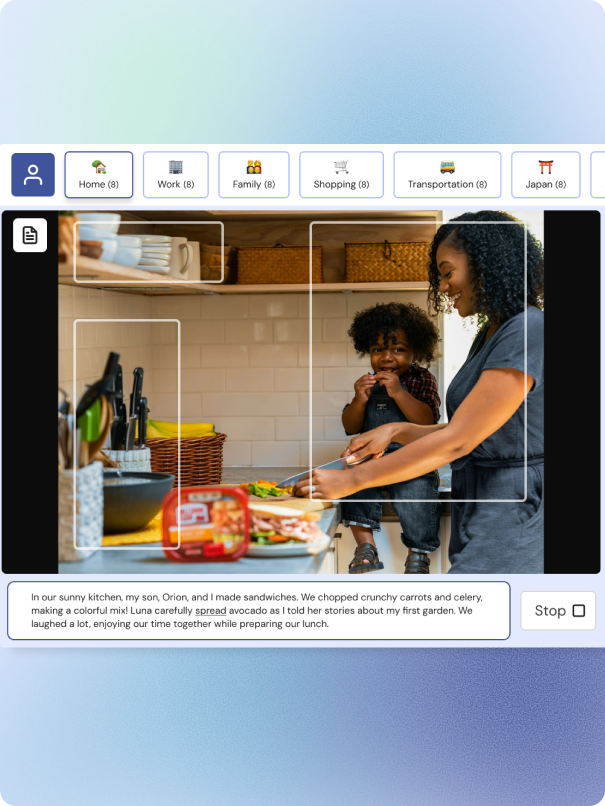
    Instead of searching through many buttons, users tap parts of a photo that represent what they want to say.

    Visual context

    This can help support communication for people who benefit from visual context.
Many AAC systems ask people to search through pages of buttons.

Visual scenes work differently.

Language appears inside meaningful moments.


A photo of breakfast might help someone say:

eggs

more coffee

I’m hungry


A playground photo might help a child say:

push me

your turn

let’s go home


The conversation grows naturally from what people see.

Who it’s for

This app may help people who:


  • use AAC
  • have aphasia after stroke
  • have a brain injury
  • are learning language
  • benefit from visual communication supports


Families, therapists, and educators can all create scenes together.

Discover More

A image of a concrete sphere, balanced between two other larger spheres

Start with one scene

You do not need special training.

Add photos and add hotspots.

Start communicating.

Scenes can grow over time as new experiences happen.


Create your first communication scene today and see how everyday photos can support conversation.

Download the app and get started.

Contact us

Phone

MySceneBoard

A supportive communication app built on real-life experiences.

Black and white MySceneBoard logo

© MySceneBoard.

2026

All Rights Reserved

Benefits

How-to

Contact Us

Tap the moment.

Say the message.

A dinner with friends.

Cousin Lisa’s wedding.

That field trip to the beach.

A moment between you and your sister.


These moments already carry meaning. This app turns them into communication.

Take a photo, tap the people or objects in the picture, and the scene becomes a simple way to speak, share, and connect.

Data points on top of landscape

What makes this special?

Built on Research about Visual Scene Displays

Creators of MSB

Created by SLPs

This app is created by a speech-language pathologist and an SLP-turned-UX designer.

MSB colour logo

Connected to Real Experiences

Visual scenes help people communicate by connecting language to real experiences instead of abstract word lists or symbol grids.

Thought bubble

Based on evidence-based principles

The design follows evidence-based principles used in visual scene displays (VSDs), an approach widely used in speech therapy to support language and participation.

How it works

Tip: use photos with good lighting

01

Take or upload a photo

02

Drag and drop to create a hotspot

03

Add a label

04

Tap the scene to communicate

Bonus

Choose to record instead of using the system’s voice

Discover More

  • Why scenes help

  • Real experiences

    Language is easier when it is connected to real experiences.

    Photo familiarity

    Instead of searching through many buttons, users tap parts of a photo that represent what they want to say.

    Visual context

    This can help support communication for people who benefit from visual context.
Many AAC systems ask people to search through pages of buttons.

Visual scenes work differently.

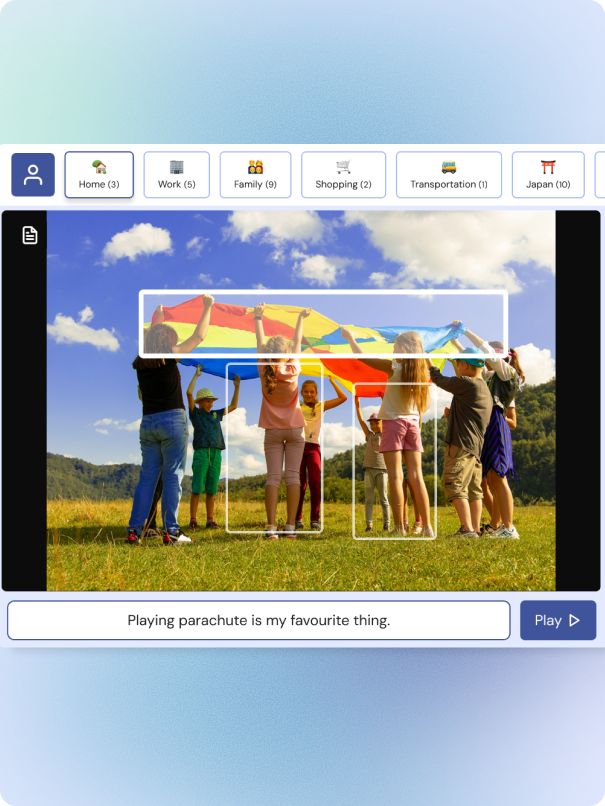
Language appears inside meaningful moments.


A photo of breakfast might help someone say:

eggs

more coffee

I’m hungry


A playground photo might help a child say:

push me

your turn

let’s go home


The conversation grows naturally from what people see.

Who it’s for

This app may help people who:


  • use AAC
  • have aphasia after stroke
  • have a brain injury
  • are learning language
  • benefit from visual communication supports


Families, therapists, and educators can all create scenes together.

Discover More

A image of a concrete sphere, balanced between two other larger spheres

Start with one scene

You do not need special training.

Add photos and add hotspots.

Start communicating.

Scenes can grow over time as new experiences happen.


Create your first communication scene today and see how everyday photos can support conversation.

Download the app and get started.

Contact us

Phone

MySceneBoard

A supportive communication app built on real-life experiences.

Black and white MySceneBoard logo

© MySceneBoard.

2026

All Rights Reserved

Benefits

How-to

Contact Us

Tap the moment.

Say the message.

A dinner with friends.

Cousin Lisa’s wedding.

That field trip to the beach.

A moment between you and your sister.


These moments already carry meaning. This app turns them into communication.

Take a photo, tap the people or objects in the picture, and the scene becomes a simple way to speak, share, and connect.

Data points on top of landscape

What makes this special?

Built on Research about Visual Scene Displays

Creators of MSB

Created by SLPs

This app is created by a speech-language pathologist and an SLP-turned-UX designer.

MSB colour logo

Connected to Real Experiences

Visual scenes help people communicate by connecting language to real experiences instead of abstract word lists or symbol grids.

Thought bubble

Based on evidence-based principles

The design follows evidence-based principles used in visual scene displays (VSDs), an approach widely used in speech therapy to support language and participation.

How it works

Tip: use photos with good lighting

01

Take or upload a photo

02

Drag and drop to create a hotspot

03

Add a label

04

Tap the scene to communicate

Bonus

Choose to record instead of using the system’s voice

Discover More

  • Why scenes help

  • Real experiences

    Language is easier when it is connected to real experiences.

    Photo familiarity

    Instead of searching through many buttons, users tap parts of a photo that represent what they want to say.

    Visual context

    This can help support communication for people who benefit from visual context.
Many AAC systems ask people to search through pages of buttons.

Visual scenes work differently.

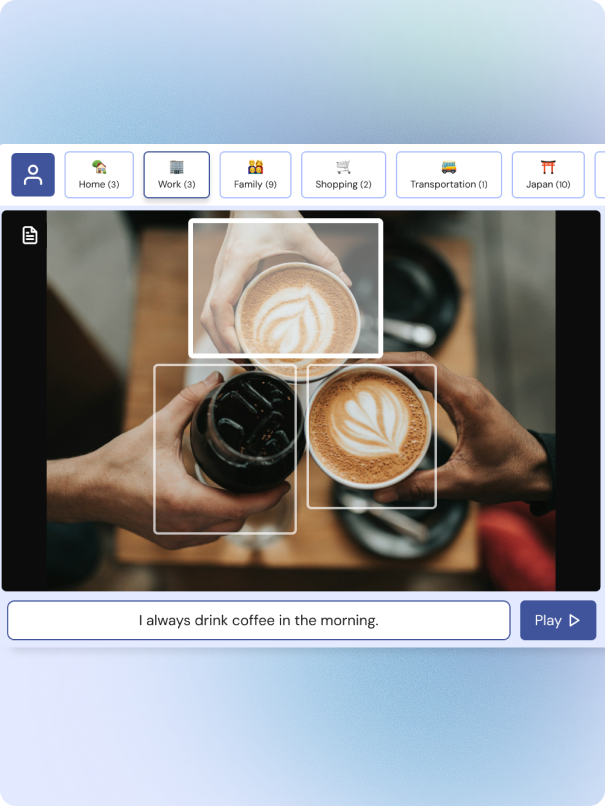
Language appears inside meaningful moments.


A photo of breakfast might help someone say:

eggs

more coffee

I’m hungry


A playground photo might help a child say:

push me

your turn

let’s go home


The conversation grows naturally from what people see.

Who it’s for

This app may help people who:


  • use AAC
  • have aphasia after stroke
  • have a brain injury
  • are learning language
  • benefit from visual communication supports


Families, therapists, and educators can all create scenes together.

Discover More

A image of a concrete sphere, balanced between two other larger spheres

Start with one scene

You do not need special training.

Add photos and add hotspots.

Start communicating.

Scenes can grow over time as new experiences happen.


Create your first communication scene today and see how everyday photos can support conversation.

Download the app and get started.

Contact us

Phone